



The Rise and Impact of Phone Bans in U.S. Public Schools
A deep dive into why public schools are banning cell phones, how state bans work, and what supporters and critics say about classroom focus and student wellbeing.
Share
December 18, 2025
A deep dive into why public schools are banning cell phones, how state bans work, and what supporters and critics say about classroom focus and student wellbeing.
Share
In recent years, cell phones have moved from novelty to necessity in daily life, but in U.S. public schools, they’ve also become a battleground. Facing growing concerns about distraction, mental health, and safety, state legislatures and school boards across the country are implementing bans on student phone use during the school day. Supporters say the restrictions restore focus in the classroom and encourage healthier habits; critics worry the rules go too far, limiting freedom and complicating emergency communication.
As of 2025, at least 35 states have enacted some form of restriction on student cell phone use, with many others considering new legislation.[1] Recent state-level actions include:
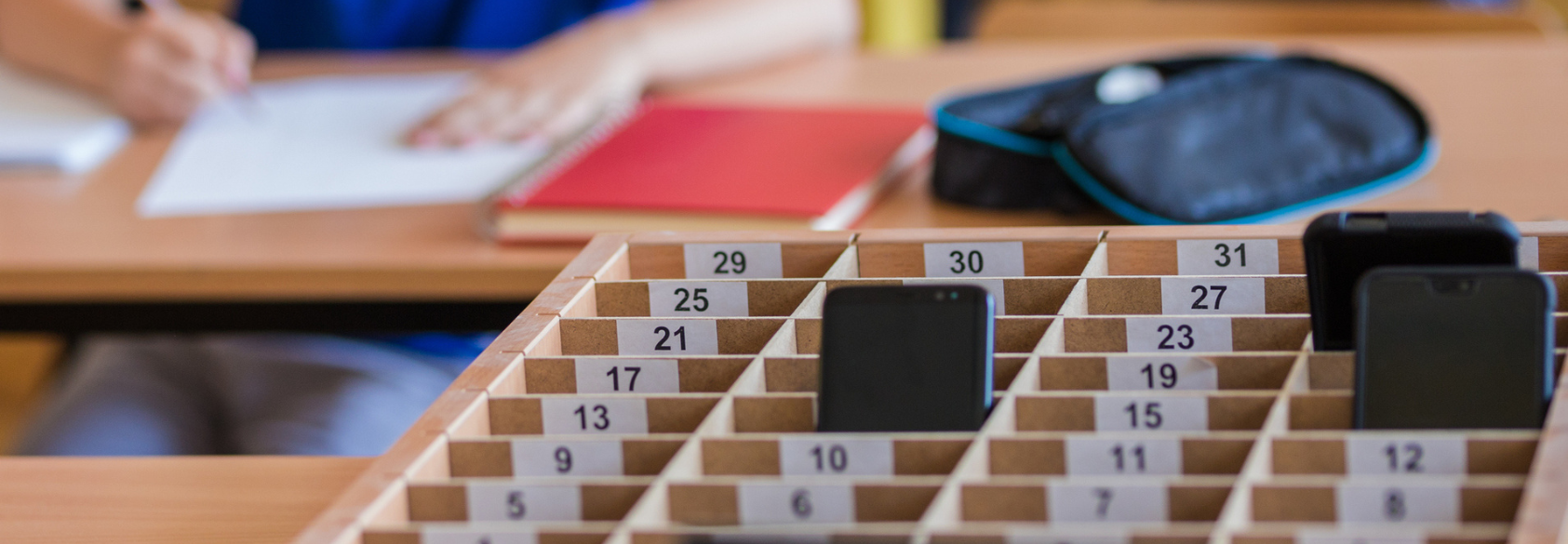
Alongside legislation, many districts have turned to practical tools like Yondr pouches, forcibly locking phones away until dismissal.
Research on cell phone bans shows mixed—but as supporters note, promising—results. Some studies link reduced phone use to better academic performance and improved mental health among students.[5] Teachers often report fewer disruptions and incidents of cyberbullying when phones are removed from the classroom, and parents in advocacy groups see restrictions as a way to build healthier digital boundaries for teens. In some cases, schools also report stronger peer-to-peer interaction, as students spend more time engaging face-to-face.[6] Supporters of cell phone bans argue that these benefits are worth the trade-off: according to a Pew Research Center survey, 68% of U.S. adults back bans during class, with 91% citing fewer distractions and 70% pointing to the development of better social skills as major reasons.[7]
Some studies link reduced phone use to better academic performance and improved mental health among students.
As Emily Boddy of Smartphone Free Childhood notes, “If kids know that there are other kids who have access to their phones … there’s always a part of their attention that’s like, ‘What am I missing on Snapchat?”[8] For advocates, bell-to-bell bans offer relief from that constant anxiety.
Critics, however, argue that these school cell phone policies are blunt instruments. Parents raise concerns about safety and the need for immediate communication in emergencies, a sentiment reflected in Pew Research Center’s finding that six in ten opponents say this is their major reason for resisting bans.[9] Others emphasize how difficult the rules can be to enforce, with districts facing long lines, stolen pouches, or creative student workarounds.
Annette Campbell Anderson of Johns Hopkins University emphasizes that the original purpose of student cell phones has been misunderstood in these debates. “Most parents gave their kids cell phones so they could have immediate access to communicate,” she explains, noting that in an era of school shootings, phones have become essential for safety as well as for managing the hectic schedules of modern families. “It had nothing to do with giving kids access to video games and platforms like Instagram and Snapchat. That was an unintentional consequence.”[10] From this perspective, critics argue that school restrictions may overlook these core reasons parents provided phones in the first place, and that bans risk treating a complex social issue as a matter solely for schools to solve.
The questions raised by cell phone bans in schools offer educators an opportunity to turn policy into civic inquiry. Students can weigh in on questions of authority, personal rights, and collective responsibility:
For guidance on structuring classroom debates tailored to younger students, see our cell phones in schools Middle School discussion, and for strategies appropriate to older students, check out our cell phone policies in schools High School discussion.
Republished with permission from Close Up.
Want to see more stories like this one? Subscribe to the SML e-newsletter!


